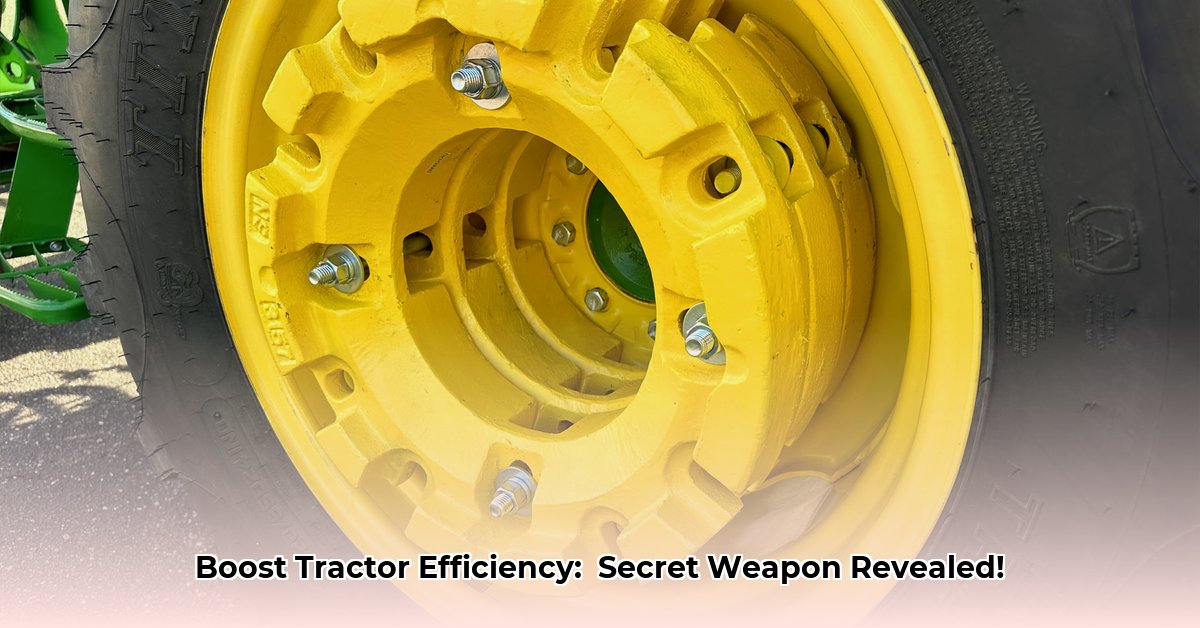
Understanding the Impact of Rim Weight on Sustainable Farming
Getting the right tractor rim weight is crucial for efficient and sustainable farming. It's not just about traction; it significantly impacts fuel consumption, soil health, and ultimately, your bottom line. Too little weight leads to wheel slippage, wasting fuel and potentially damaging soil through compaction. Conversely, excessive weight contributes to soil compaction, hindering water penetration, root growth, and overall crop yields. Finding the optimal balance—the “Goldilocks zone”—is key to maximizing efficiency while minimizing environmental impact. This guide outlines how to achieve this balance, improving both your farm's productivity and its long-term sustainability. For more information on tractor wheels, check out this helpful resource: tractor wheels.
Finding the Right Rim Weight: Key Variables to Consider
Determining the ideal rim weight isn't a one-size-fits-all solution. Several factors influence the optimal weight for your specific operation:
Soil Type: Sandy soils require less weight than heavier clay soils, which are more prone to compaction. Over-weighting clay soils can severely damage their structure, impacting long-term fertility and resilience.
Soil Moisture: Wet soil is more vulnerable to compaction. Adding less weight while working in wet conditions is critical to minimizing soil damage.
Tractor Size and Power: Larger, more powerful tractors may require more weight, but even powerful machines can suffer negative consequences from excessive weight.
Implements Used: Heavier implements (e.g., large plows) necessitate more weight to maintain stability and prevent slippage.
Working Conditions: Steep slopes or hilly terrain demand increased weight for stability and safety, preventing potential accidents.
A Step-by-Step Guide to Optimizing Tractor Rim Weight
Follow these steps to find the optimal rim weight for your operation:
Assess Your Current Situation: Observe your tractor's performance. Is there excessive wheel slippage? Is soil compaction apparent? Document these observations to establish a baseline.
Consult Your Tractor's Manual: Your owner's manual provides manufacturer-recommended weight guidelines based on your specific tractor model. This serves as an excellent starting point.
Experiment and Monitor: Begin with the manufacturer's recommendation. Gradually adjust the weight, meticulously documenting fuel consumption and soil conditions after each adjustment. This iterative process helps pinpoint the optimal weight for your conditions.
Utilize Technology: Precision agriculture tools, such as soil sensors and yield monitors, provide real-time feedback on soil conditions, enabling fine-tuning based on specific field areas.
Explore Sustainable Alternatives: Investigate rim weight options made from recycled or sustainable materials.
Shared Responsibility: A Collaborative Approach to Sustainable Practices
Optimizing rim weight is a shared responsibility involving various stakeholders:
- Farmers: Monitor soil health, fuel efficiency, and adjust weights based on observed conditions and feedback.
- Tractor Manufacturers: Provide clear weight guidelines and develop environmentally friendly weight materials.
- Weight Suppliers: Offer a variety of weights with clear specifications, incorporating sustainable material options.
- Research Institutions: Conduct research to improve understanding of the relationship between tractor weight, soil health, and fuel efficiency.
Sustainable Wheel Weight Options: Cast Iron vs. Fluid-Filled Tires
Choosing between cast iron wheel weights and fluid-filled tires depends on various factors. Cast iron offers superior weight distribution and adjustability, enabling precise balance and traction control, but comes with a higher initial cost. Fluid-filled tires present a more budget-friendly alternative, improving ride comfort due to their inherent shock absorption. However, they provide less customizable weight distribution and can present challenges in cold climates. Consider the environmental impact of both options, including disposal and manufacturing processes, when making your decision. "The best choice depends on your individual needs," says Dr. Emily Carter, Agricultural Engineering Professor at Cornell University. "A thorough assessment of your soil type, terrain, and budget is vital for making an informed decision."
Looking Ahead: Data-Driven Precision for Sustainable Weight Management
The future of sustainable agriculture hinges on data-driven precision. Advancements in technology will allow for real-time rim weight optimization, adapting to dynamic soil conditions and minimizing environmental impact. Research into sustainable materials for rim weights is crucial for a more environmentally friendly future in farming. The quest for the ideal rim weight extends beyond mere traction; it’s integral to a broader strategy for sustainable farming practices. "Optimizing rim weight isn't just about efficiency; it's a crucial element of a holistic approach to sustainable agriculture," notes Dr. David Miller, Soil Scientist at the University of California, Davis. "By carefully considering soil health, fuel efficiency, and the environmental impact of our choices, we can create farming practices that are both productive and sustainable."